
Puffy face after 40 is very common — especially in the morning.
They wake up, look in the mirror, and see a face that feels heavier, less defined, and more tired than it used to.
The eyes may look swollen.
The cheeks may feel fuller.
The jawline may appear softer.
Sometimes, the whole face looks like it is holding on to something.
Because of this, the face may feel heavier and less defined when you wake up.
This can feel frustrating — especially when you are already trying to take care of yourself.
However, the good news is this: morning puffiness is not always random, and it is not always “just aging.”
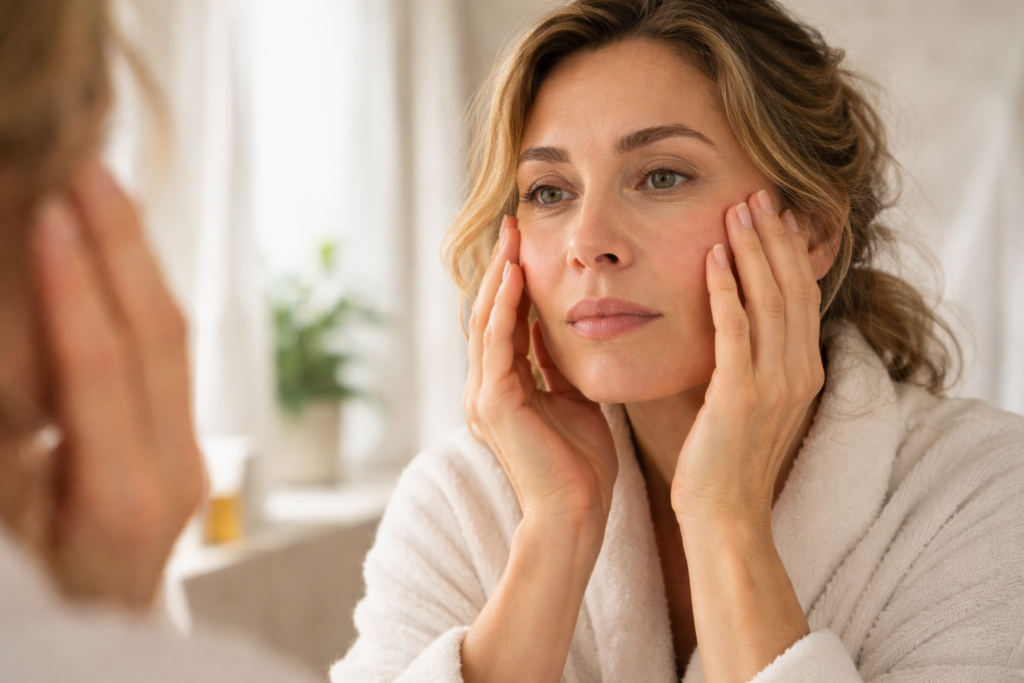
Very often, there are simple reasons behind it.
Why Puffy Face After 40 Happens More Easily
After 40, the face may respond differently to stress, sleep, food, posture, hormones, and daily habits.
What once passed unnoticed may now show up clearly in the mirror.
This does not mean something is wrong with you. It often means your body needs more support and a better rhythm.
Facial puffiness can become more visible when:
- fluid is not moving well,
- sleep quality is poor,
- the body is under stress,
- the face and neck hold tension,
- daily habits quietly work against circulation and drainage.
1. Poor sleep can show on the face very quickly
A bad night often appears on the face first.
When sleep is short, broken, or poor in quality, the face can look more swollen, tired, flat, or dull the next morning.
The under-eye area may also hold more fluid.
What may help:
- going to bed earlier when possible,
- sleeping in a slightly better position,
- reducing late-night overstimulation,
- keeping evenings calmer and more regular.
A more rested face often starts with a more rested nervous system.
2. Facial tension can make the face look heavier
Not all puffiness is just fluid.
Sometimes the face looks fuller or harder because it is tense.
Jaw tension, forehead tension, poor posture, neck tightness, and stress can all affect how the face looks in the morning.
A tense face can look:
- heavier,
- more rigid,
- less lifted,
- more tired.
What may help:
- relaxing the jaw,
- softening the neck and shoulders,
- avoiding clenching,
- using a gentler evening rhythm.
Sometimes the face needs less force and more release.
3. Salt, late meals, and daily habits may play a role
Some women notice more puffiness after:
- salty evening meals,
- very late eating,
- dehydration,
- alcohol,
- highly processed foods,
- poor routine consistency.
This does not mean you need perfection.
It simply means the face often reflects what the body had to deal with the night before.
What may help:
- drinking enough water through the day,
- keeping dinner lighter,
- noticing what makes your face look worse the next morning,
- supporting your body with more regular habits.
4. The neck and lymphatic area matter more than most women think
Many women focus only on the face, but the neck, jawline, and lymphatic pathways matter too.
If this area is tense, stagnant, or unsupported, the face may look more swollen and less defined.
That is one reason why morning puffiness is not always solved by skincare alone.
What may help:
- paying attention to the neck and lower face,
- avoiding rough handling,
- supporting drainage gently,
- improving posture during the day.
A clearer face often begins below the cheekbones.
5. Too much skincare can sometimes make the face look worse
This surprises many women.
When the face already feels sensitive, puffy, or reactive, too many products can make it look more stressed rather than better.
Too much layering, too much rubbing, or too many active products can leave the face looking overloaded.
What may help:
- simplify your routine,
- reduce irritation,
- focus on what feels calming and supportive,
- stop chasing too many trends at once.
Sometimes less really does look better.
6. Cold can help — but only when used gently
Some women feel immediate relief from a gentle cold routine.
Used carefully, cold can help the face feel fresher, calmer, and less puffy.
But too much ice, too much pressure, or harsh application can irritate the skin and backfire.
What may help:
- a short and gentle cold routine,
- soft application,
- consistency over intensity,
- paying attention to how your own skin reacts.
The goal is not to shock the face.
The goal is to support it.
What Helps Puffy Face After 40
Usually not one miracle product.
What helps most is a combination of:
- fewer daily mistakes,
- better sleep rhythm,
- less facial tension,
- simple support for drainage,
- calmer skincare,
- more realistic daily habits.
A face often looks fresher when the whole routine becomes more supportive.
Final thought
If your face looks puffier in the morning after 40, it does not automatically mean your looks are fading.
It may simply mean your face is reacting to stress, tension, routine mistakes, or poor recovery.
That is good news.
Because many of these things can be improved.
Not with panic.
Not with more pressure.
But with better daily support.
A puffy face after 40 often improves when daily habits become calmer, simpler, and more supportive.
If facial swelling is sudden, severe, or painful, it should not be ignored.
Cleveland Clinic – Facial Swelling
https://my.clevelandclinic.org/health/symptoms/facial-swelling
If you want more support
Want to learn the common mistakes that can make your face look puffier, older, or more tired after 40?
Download the free guide here: https://karimasacredlife.com/face-reset-after-40/
And if you want a more structured daily reset, explore the full 14-day plan here:
https://karimasacredlife.com/14-day-plan/